
Intellectual Assets and How to protect them
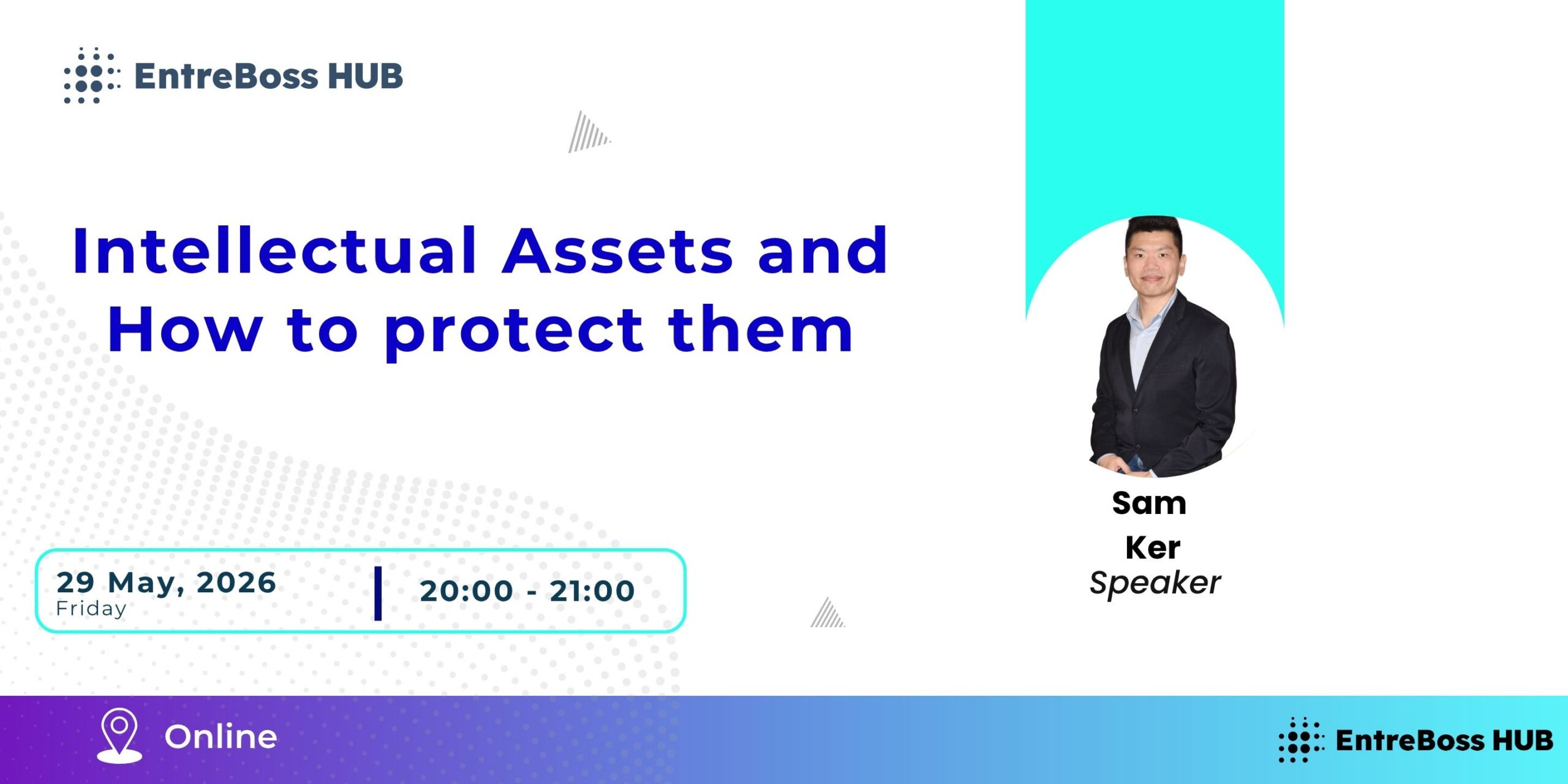
For early-stage startups, confusion often exists around what can actually be protected by law versus what remains a strategic internal asset. This workshop bridges that gap by dividing a company’s intangible wealth into two distinct categories, then mapping them directly to modern corporate AI strategies.
This workshop is designed specifically for founders to demystify how to identify, protect, and leverage what they build. In the fast-moving AI landscape, standard legal playbooks are being rewritten. This session provides founders with a clear framework to separate their conceptual assets from formal legal rights, ensuring they build a defensible moat from day one.
Founders will learn to audit their company’s internal value. The curriculum breaks down the critical distinction between what you own in practice versus what you own by law.
Intellectual Assets (The “What You Know”)
These are internal value drivers that are highly valuable but don’t always fit into a neat legal box.
Proprietary Data Ecosystems: Cleaned, structured, or uniquely labeled training data.
Methodologies & Workflows: The unique way your team chains AI models or structures prompts to solve a problem.
Human Capital & Domain Expertise: The specialized knowledge your team possesses about a specific industry problem.
Intellectual Property (The “What You Legalize”)
These are formal, legally enforceable rights that protect your innovations from competitors.
Patents: Protecting novel, non-obvious technical implementations (e.g., a fundamentally new machine learning architecture).
Trade Secrets: Keeping proprietary source code, weights, or algorithms strictly confidential under NDAs and security protocols.
Copyrights: Protecting original software code, UI designs, and written content (noting the current legal boundaries regarding AI-generated outputs).
Trademarks: Safeguarding your brand identity, product names, and logos in the marketplace.
Once founders understand what they have, the workshop shifts to strategic execution, addressing the unique challenges of building a company today.
Building a Defensible Moat: Why relying solely on “wrapped” third-party APIs leaves startups vulnerable. Founders will learn how to combine unique datasets (assets) with trade secrets (IP) to build a defensible market position.
Navigating AI Data Risks: Practical training on open-source licensing, ensuring customer data usage complies with privacy laws, and avoiding IP infringement when training models.
Investor Readiness: What venture capitalists look for during technical due diligence. Founders will learn how to present a clean “IP hygiene” sheet that proves the startup genuinely owns its core technology.
By the end of the workshop, first-time founders will walk away with a practical toolkit rather than just theory:
An IP/Asset Audit Checklist: A framework to list and categorize everything the company builds.
A Strategic Decision Matrix: A tool to help decide when to open-source, when to file a patent, and when to keep code as a trade secret.
About the Sam Ker
Sam works on making hardware move with his expertise in aircraft design. Having been in the aerospace manufacturing industry for over 10 years and aerospace research for over 20 years, he supports with the interpretation of regulatory requirements, on top of making hardware concepts for new products big and small.
Also being a patent owner himself, he works on intellectual property and intellectual asset management, looking at strategies to protect what matters most.
https://www.linkedin.com/in/samker/