Adaptive Companies Competing Through Fractional, Remote & On-Demand Talent
Programme Overview:
As businesses face growing cost pressures and talent shortages, many are turning to fractional, remote, and on-demand talent as a smarter way to build capability. This session explores why adaptive workforce models are gaining momentum, the opportunities and challenges they present, and how startups and SMEs can leverage flexible talent to drive sustainable business growth and competitive advantage.
Programme Description:
Companies are moving away from “hire full-time or don’t hire at all.” They’re building teams from a spectrum of talent — full-time, fractional, remote, interim, on-demand, matched to the actual problem at hand. This is driven by cost pressure, mature remote work infrastructure and professionals increasingly choosing portfolio careers over single-employer loyalty.
In Singapore, startups and SMEs are drawn to this model because it gives them access to senior expertise without the cost of full-time executives, although many are still building the internal capability to manage flexible talent effectively.
Why It’s Spreading
- Lower risk — easier to trial than a full-time executive hire
- Right talent for the problem — specialists for discrete, high-stakes challenges rather than generalists
- Talent-side pull — professionals choosing autonomy and diversified income over one employer
The Core Tension
Many companies use flexible talent and AI mainly to reduce costs, without changing how they make decisions. These tools can create value but they do not do so automatically.
Key Themes Include:
- Cost-cutting patch vs. real value creation — what’s the difference in practice?
- What’s the first role a Singapore SME should fractionalise and what should it never fractionalise?
- What internal readiness has to exist before a company can use fractional talent well?
- How do you avoid under-empowering a fractional leader, given outcomes but not authority?
- Where does this trend go in Singapore over the next few years?
Target Audience
- Founders and SME owners — Building leadership capability without increasing full-time headcount
- HR and People leaders — Designing policies for fractional, remote, and contract talent
- Fractional professionals and consultants — Executives, specialists, and freelancers building or exploring portfolio careers
- Investors and advisors — Evaluating lean operating models in the companies they support
- Corporate innovation and transformation leaders — Exploring flexible resourcing as part of organisational transformation
Agenda:
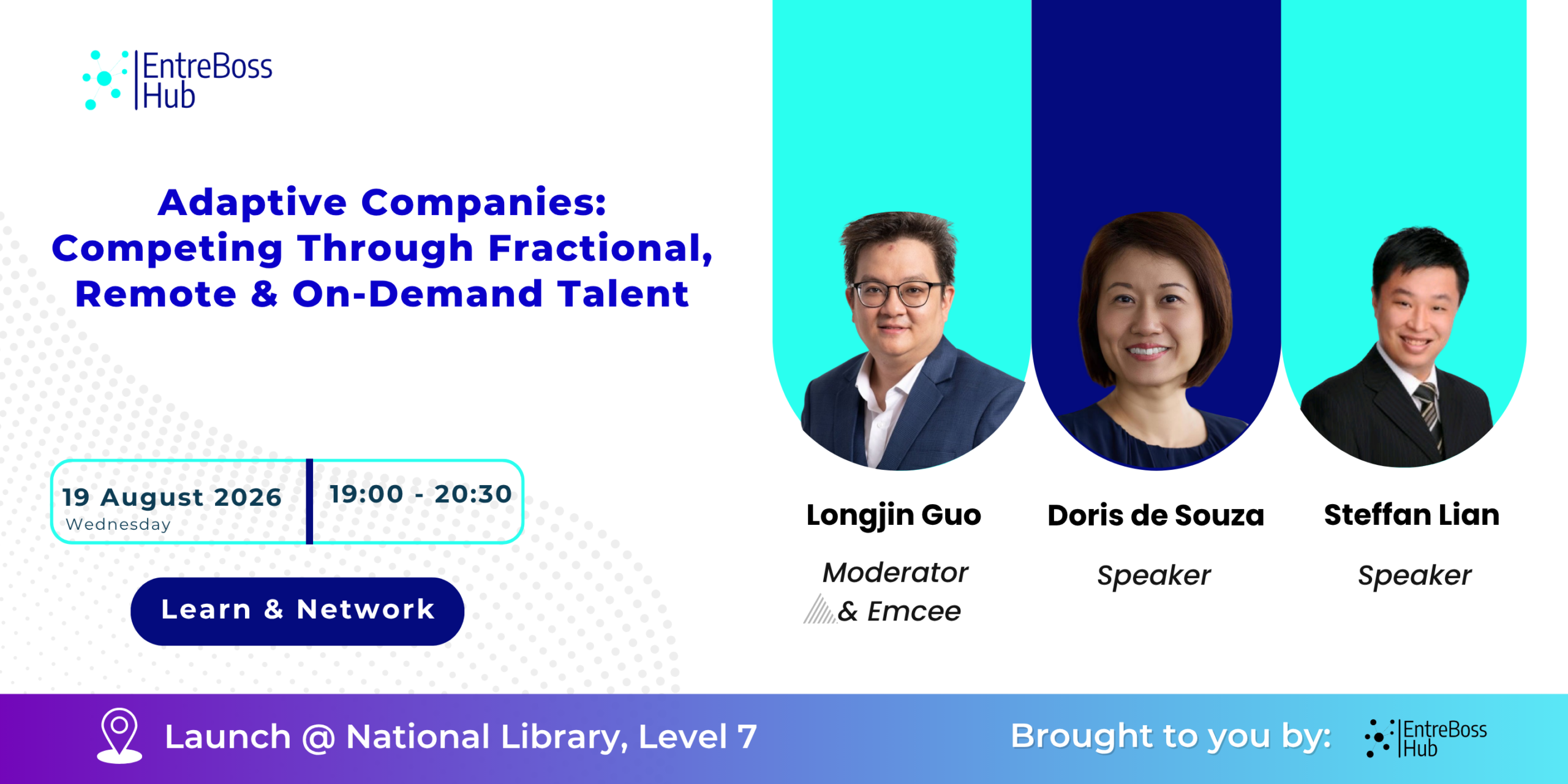
- 19:00 – 19:15: Registration
- 19:15 – 19:45: “Adaptive Companies Competing Through Fractional, Remote & On-Demand Talent” Panel
- 19:45 – 20:00: Q&A
- 20:00 – 20:30: Networking
About the Speakers:
With over a decade of experience in organisational development (OD) and learning & development (L&D), Doris de Souza is a seasoned coach and practitioner who partners with organisations to build leadership capability, drive culture change, and enable performance. She has worked across diverse industries, designing and facilitating impactful programmes while coaching leaders at senior levels.
In recent years, Doris has taken on fractional roles, supporting organisations with strategic OD and L&D expertise on a flexible, high-impact basis. She brings a practical, ground-up perspective on navigating fractional work—balancing influence, stakeholder management, and delivery—making her insights especially relevant for professionals exploring alternative career pathways.
Steffan Lian is the Founder of Recruit123, an AI-powered recruitment platform helping companies in Singapore for their hiring requirements
Steffan has built his career on fractional and business process outsourcing- embedded onsite as Talent Acquisition Lead for global names like Alcon, Baxter, GSK, Sanofi and Zuellig Pharma, driving hiring outcomes without being a permanent headcount.
He brings more than 16 years of experience deploying talents into organiSations.
About the Moderator and Emcee:
Longjin Guo is a business strategist with fifteen years leading legal, compliance and external affairs for NASDAQ-listed and private companies across APAC, the Middle East, Africa and Russia — in MedTech, semiconductors, robotics and manufacturing.
Longjin works where commercial ambition meets hard constraint: how a business actually enters a market and captures value in it — entity and distribution structure, transfer pricing, funding, sanctions and export controls, US-China exposure — and how emerging AI and robotics governance reshapes that calculus.
He advises founders and boards on growth plans that are commercially sound and survive contact with a regulator, and on where the regulatory map is moving next.